Benefit of the doubt synonym words like leniency, trust, grace, and forbearance describe the act of giving someone trust or understanding, even when there is uncertainty or suspicion. For example, “She gave him the benefit of the doubt,” or “The manager showed leniency toward the late submission.”
If you’re writing about trust, forgiveness, or judgment, each word highlights a different shade of understanding—from cautious allowance to full confidence in someone’s intentions.
In this guide, you’ll learn the meaning and example sentences for each benefit of the doubt synonym, so you can express trust, grace, and understanding with clarity and nuance.
What Does “Benefit of the Doubt” Mean?
The phrase “benefit of the doubt” refers to choosing to trust someone’s intentions or actions, even when evidence is unclear or could be interpreted negatively.
Examples:
- “Despite the mistake, he was given the benefit of the doubt.”
- “We should extend the benefit of the doubt until all facts are known.”
Giving the benefit of the doubt does not always mean excusing behavior; it often implies fairness, patience, or trust in someone’s character.
Synonyms of “Benefit of the Doubt” with Meanings, Examples, and Usage Tips
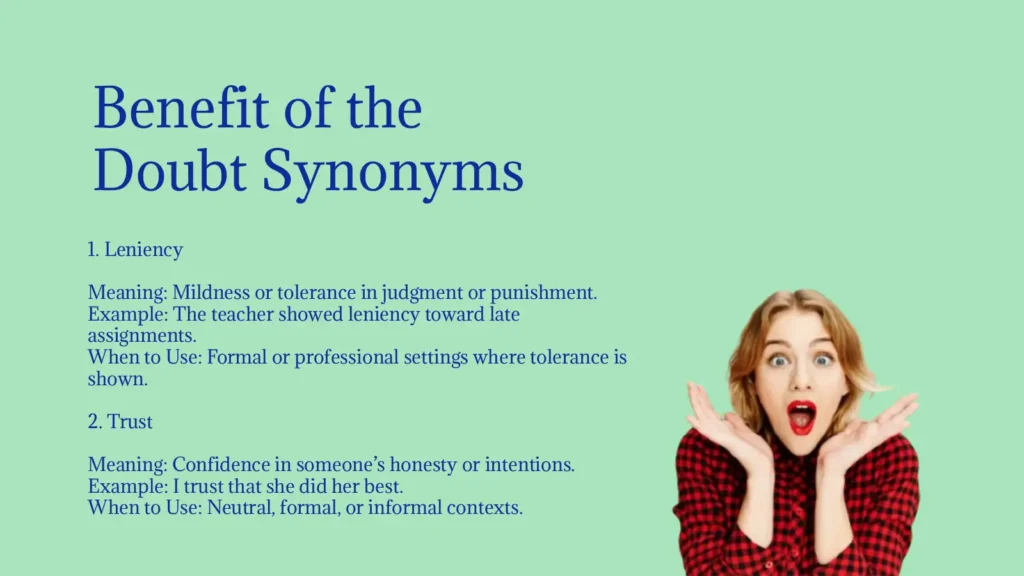
1. Leniency
Meaning: Mildness or tolerance in judgment or punishment.
Example: The teacher showed leniency toward late assignments.
When to Use: Formal or professional settings where tolerance is shown.
2. Trust
Meaning: Confidence in someone’s honesty or intentions.
Example: I trust that she did her best.
When to Use: Neutral, formal, or informal contexts.
3. Grace
Meaning: Favor or kindness extended without judgment.
Example: He was granted grace despite the error.
When to Use: Formal, religious, or narrative writing.
4. Forbearance
Meaning: Patient self-control and tolerance toward someone.
Example: The judge exercised forbearance with the defendant.
When to Use: Formal, legal, or literary contexts.
5. Understanding
Meaning: Recognition and sympathy for someone’s situation.
Example: She showed understanding toward the struggling student.
When to Use: Everyday, professional, or personal writing.
6. Tolerance
Meaning: Willingness to accept differing behavior or opinions.
Example: The community showed tolerance toward newcomers.
When to Use: Formal or societal discussions.
7. Benefit
Meaning: Favor or advantage given in judgment.
Example: He received the benefit of the doubt in court.
When to Use: Formal or legal context.
8. Mercy
Meaning: Compassion or forgiveness shown to someone.
Example: The manager showed mercy for the delay.
When to Use: Emotional, narrative, or professional tone.
9. Indulgence
Meaning: Lenient treatment or allowing mistakes.
Example: Parents often show indulgence toward children’s errors.
When to Use: Informal or narrative writing.
10. Sympathy
Meaning: Understanding and compassion toward someone’s situation.
Example: She showed sympathy despite his mistake.
When to Use: Personal, professional, or narrative contexts.
11. Excuse
Meaning: Overlooking a fault or offense.
Example: We can excuse minor oversights this time.
When to Use: Casual, professional, or informal writing.
12. Allowance
Meaning: Permission or tolerance for behavior.
Example: He was given allowance for being late due to traffic.
When to Use: Neutral or formal contexts.
13. Forgiveness
Meaning: Letting go of resentment or judgment.
Example: Forgiveness was extended despite the misunderstanding.
When to Use: Personal, emotional, or moral contexts.
14. Benefit
Meaning: Favor given to someone, trusting their intentions.
Example: She gave him the benefit, assuming good intent.
When to Use: Formal or neutral contexts.
15. Confidence
Meaning: Trust in someone’s character or actions.
Example: I have confidence that he will handle it well.
When to Use: Professional, motivational, or narrative contexts.
16. Charitableness
Meaning: Generosity and tolerance in judgment.
Example: He was treated with charitableness despite his error.
When to Use: Literary or formal contexts.
17. Patience
Meaning: Ability to wait or remain tolerant.
Example: She showed patience while he explained his side.
When to Use: Everyday, professional, or instructional contexts.
18. Consideration
Meaning: Thoughtful regard for someone’s situation or intentions.
Example: Out of consideration, she assumed no ill intent.
When to Use: Formal, professional, or empathetic writing.
19. Kindness
Meaning: Gentle or generous behavior toward someone.
Example: He responded with kindness despite the mistake.
When to Use: Personal, professional, or narrative tone.
20. Understanding Nature
Meaning: Inherent tendency to be sympathetic and tolerant.
Example: Her understanding nature allowed her to give the benefit of the doubt.
When to Use: Descriptive or narrative contexts.
21. Open-mindedness
Meaning: Willingness to consider all sides without judgment.
Example: Open-mindedness led him to trust her explanation.
When to Use: Modern, neutral, or formal writing.
22. Acceptance
Meaning: Willingness to receive or allow without judgment.
Example: Acceptance of minor mistakes builds trust.
When to Use: Personal or professional contexts.
23. Nonjudgment
Meaning: Avoiding criticism or passing judgment.
Example: A nonjudgment approach encourages honesty.
When to Use: Informal, narrative, or psychological writing.
24. Reluctant Trust
Meaning: Hesitant but given confidence in someone.
Example: She gave reluctant trust until results proved otherwise.
When to Use: Emotional or narrative writing.
25. Benevolence
Meaning: Desire to do good and act kindly.
Example: His benevolence led him to give the benefit of the doubt.
When to Use: Formal, literary, or moral contexts.
26. Understanding Gesture
Meaning: An act showing tolerance or trust.
Example: Offering a second chance was an understanding gesture.
When to Use: Professional or narrative contexts.
27. Softening
Meaning: Reducing strictness or harsh judgment.
Example: The policy allowed softening in special cases.
When to Use: Business, legal, or formal writing.
28. Clemency
Meaning: Mercy or leniency in judgment or punishment.
Example: The governor showed clemency to the first-time offender.
When to Use: Legal or formal contexts.
29. Restraint
Meaning: Self-control and moderation in criticism or judgment.
Example: He exercised restraint before making accusations.
When to Use: Formal, professional, or emotional writing.
30. Latitude
Meaning: Freedom to act without strict judgment.
Example: Employees were given latitude in managing their tasks.
When to Use: Business, casual, or professional contexts.
Choosing the Right Synonym for “Benefit of the Doubt”
Selecting the right synonym depends on your tone and purpose:
| Tone / Context | Best Synonyms |
|---|---|
| Neutral / Explanatory | Trust, Understanding, Tolerance, Consideration |
| Formal / Legal | Clemency, Forbearance, Leniency, Whichsoever |
| Emotional / Personal | Grace, Mercy, Kindness, Forgiveness |
| Professional / Business | Latitude, Allowance, Restraint, Softening |
Cultural Tip
In formal writing, “forbearance” or “leniency” sounds polished. In everyday storytelling or advice, “trust” and “grace” feel natural and emotionally engaging.
Conclusion
Understanding the synonyms of benefit of the doubt helps you express trust, tolerance, and fairness in every situation. Each word—whether leniency, grace, or trust—captures a different level of understanding and patience.
By choosing the right synonym, you control tone, clarity, and emotional impact, making your writing more precise and compassionate. Every uncertain situation has a choice—and the right word makes understanding unmistakable.

I am Awa White, a passionate writer who loves crafting stories that touch hearts. I explore emotions and everyday life through my words. I strive to inspire and connect with readers through every piece I write.