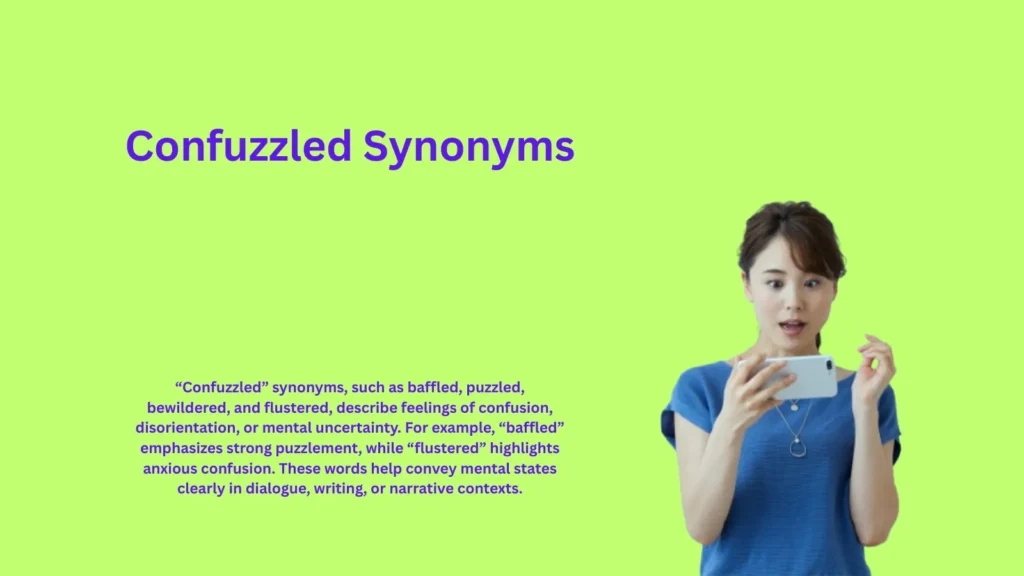

Looking for the perfect word for “confuzzled”? Whether you mean feeling confused, bewildered, perplexed, or mentally scrambled, the right synonym can capture the exact level of puzzlement or disorientation. Confuzzled synonyms, like baffled, flummoxed, befuddled, and perplexed, highlight the variety of ways people experience mental confusion.
These words are ideal for writing, storytelling, social media posts, or casual conversation when you want to describe confusion in a precise, relatable way.
Use these synonyms to convey uncertainty, mental fog, or sheer puzzlement with clarity and style.
What Does “Confuzzled” Really Mean?
“Confuzzled” is an informal term combining confusion and puzzlement. It describes a state where someone feels mentally mixed up, unsure, or bewildered. Key traits include:
- Perplexity: Difficulty understanding a situation or information
- Bewilderment: Feeling lost or unsure how to react
- Mild Amusement: Often used playfully in casual conversation to express light confusion
Think of being confuzzled as that moment when everything seems unclear, and you’re unsure what to think, say, or do.
Confuzzled Synonyms (With Meanings, Usage & Examples)
1. Baffled
Meaning: Completely confused or puzzled.
When to Use: Everyday situations, writing, or storytelling.
Example: “She was baffled by the complex instructions.”
2. Bewildered
Meaning: Deeply confused or uncertain.
When to Use: Literary writing, personal essays, or narrative storytelling.
Example: “He looked bewildered when he walked into the unfamiliar room.”
3. Perplexed
Meaning: Puzzled or uncertain about how to respond or understand.
When to Use: Formal or casual contexts, essays, or dialogue.
Example: “I was perplexed by the sudden change in schedule.”
4. Flummoxed
Meaning: Totally confused or thrown off.
When to Use: Informal writing, humor, or casual conversation.
Example: “She was flummoxed by the tricky riddle.”
5. Confounded
Meaning: Confused and often frustrated.
When to Use: Writing, expressions of irritation or surprise.
Example: “I was confounded by his strange behavior.”
6. Stumped
Meaning: At a loss or unsure how to proceed.
When to Use: Casual speech, storytelling, or sports commentary.
Example: “The tricky question left him stumped.”
7. Muddled
Meaning: Confused or disorganized in thought.
When to Use: Academic writing, personal reflections, or narrative.
Example: “Her thoughts were muddled after the long meeting.”
8. Befuddled
Meaning: Confused, often in a slightly humorous or lighthearted way.
When to Use: Casual writing, humorous contexts, or personal anecdotes.
Example: “He was befuddled by the complicated recipe.”
9. Disoriented
Meaning: Feeling lost, unsure, or out of place.
When to Use: Formal writing, travel narratives, or emotional reflection.
Example: “She felt disoriented after waking up in a strange city.”
10. Foggy
Meaning: Mentally unclear or confused.
When to Use: Informal, conversational writing, or storytelling.
Example: “I’m feeling foggy after staying up all night.”
11. Flustered
Meaning: Confused, agitated, or nervous.
When to Use: Everyday situations, dialogue, or descriptive writing.
Example: “He became flustered when asked an unexpected question.”
12. Addled
Meaning: Confused or mentally muddled.
When to Use: Informal writing, humor, or dialogue.
Example: “Her addled mind couldn’t remember where she put her keys.”
13. Discombobulated
Meaning: Confused and out of sorts.
When to Use: Informal writing, humorous contexts, or storytelling.
Example: “The sudden schedule change left everyone discombobulated.”
14. Puzzled
Meaning: Confused and trying to figure something out.
When to Use: Writing, speech, or storytelling.
Example: “He was puzzled by the cryptic note.”
15. Nonplussed
Meaning: Surprised and confused so much that you’re unsure how to react.
When to Use: Formal writing, literature, or essays.
Example: “She was nonplussed by his unexpected announcement.”
16. Confused
Meaning: Not understanding or unclear.
When to Use: Universal use, writing, conversation, or storytelling.
Example: “He was confused by the conflicting instructions.”
17. Dazed
Meaning: Confused, often from shock or surprise.
When to Use: Literature, storytelling, or descriptive writing.
Example: “She stood dazed after hearing the news.”
18. Bewitched
Meaning: Figuratively confused or spellbound, often by something puzzling.
When to Use: Poetic or literary contexts.
Example: “He was bewitched by the strange painting.”
19. Staggered
Meaning: Overwhelmed and mentally confused.
When to Use: Narrative, essays, or storytelling.
Example: “He was staggered by the amount of work left to do.”
20. Befogged
Meaning: Confused or obscured in understanding.
When to Use: Creative writing or literary contexts.
Example: “Her mind was befogged after the long argument.”
21. Lost
Meaning: Unsure what to do or think.
When to Use: Casual conversation, writing, or reflective content.
Example: “He felt lost in the middle of the city.”
22. Addlepated
Meaning: Silly or confused in thought.
When to Use: Humorous or informal contexts.
Example: “The addlepated student forgot his homework again.”
23. Mysterious
Meaning: Confusing due to being puzzling or unclear.
When to Use: Storytelling, literature, or description.
Example: “The mysterious message left everyone confuzzled.”
24. Overwhelmed
Meaning: Confused due to excess information or emotions.
When to Use: Essays, personal writing, or narrative.
Example: “She was overwhelmed by the complexity of the task.”
25. Flabbergasted
Meaning: Shocked and confused, often in disbelief.
When to Use: Informal, humorous, or dramatic storytelling.
Example: “He was flabbergasted by the sudden plot twist.”
26. Stupefied
Meaning: Amazed and confused to the point of being stunned.
When to Use: Literary writing, storytelling, or dramatic narratives.
Example: “She was stupefied by the magician’s trick.”
27. Perplexed Beyond Words
Meaning: Extremely confused and unsure how to respond.
When to Use: Formal or informal writing, storytelling.
Example: “I was perplexed beyond words by the sudden changes.”
28. Confoundedly Confused
Meaning: Intensely puzzled or bewildered.
When to Use: Creative writing or emphatic expression.
Example: “He was confoundedly confused by the math problem.”
29. All at Sea
Meaning: Completely lost or confused about what to do.
When to Use: Idiomatic, casual writing, or dialogue.
Example: “After the instructions, I was all at sea.”
30. Flummoxedly Bewildered
Meaning: Totally baffled or thrown off.
When to Use: Humorous or emphatic expression in casual writing.
Example: “She was flummoxedly bewildered by the new technology.”
How to Choose the Right Synonym for Confuzzled
- Formal or Literary Use: Perplexed, nonplussed, stupefied, befogged
- Casual or Informal Use: Flummoxed, stumped, flustered, all at sea
- Humorous or Playful Use: Befuddled, addlepated, flummoxedly bewildered
- Emotional or Shocked Confusion: Flabbergasted, dazed, staggered
- General Confusion: Confused, puzzled, baffled, bewildered
Conclusion
Confuzzled synonyms capture the wide spectrum of mental confusion—from light puzzlement to intense bewilderment. Words like baffled, perplexed, and bewildered convey serious or formal confusion, while flummoxed, befuddled, and all at sea are more playful or casual.
Choosing the right term allows your writing or conversation to express the precise level of confusion, making your descriptions relatable, accurate, and emotionally resonant.