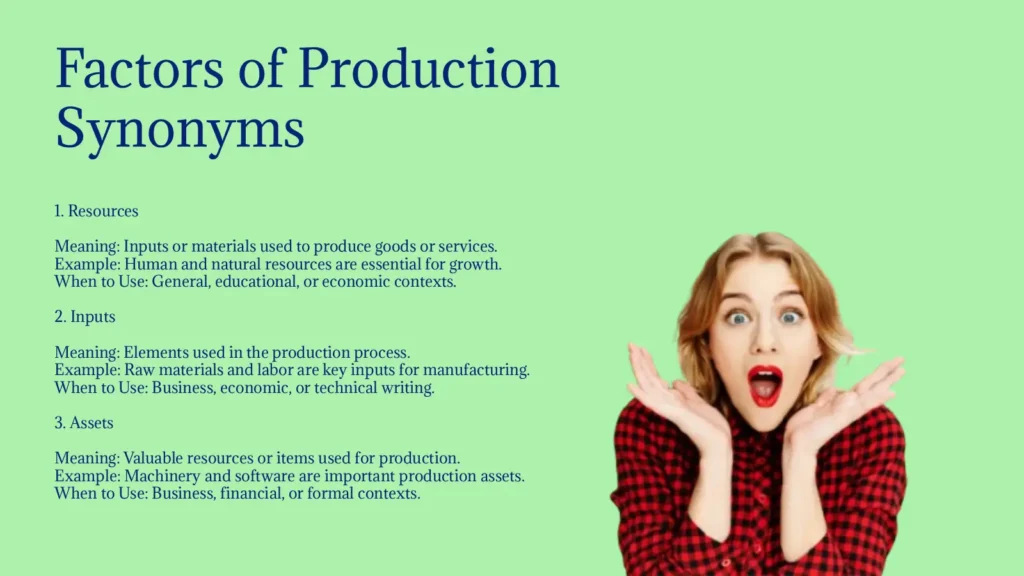

Factors of production synonym words like resources, inputs, assets, and capital describe the essential elements used to produce goods and services. For example, “Labor is a critical resource in manufacturing,” or “Land and capital are key inputs in production.”
If you’re writing about economics, business, or resource management, each word highlights a different nuance—from tangible assets to human effort or organizational inputs.
In this guide, you’ll learn the meaning and example sentences for each factors of production synonym, so you can discuss economic elements, resources, and production clearly and effectively.
What Does “Factors of Production” Mean?
The term “factors of production” refers to the resources used in producing goods and services, typically classified as land, labor, capital, and entrepreneurship. These are the building blocks of economic output.
Examples:
- “Land, labor, and capital are the main factors of production.”
- “Entrepreneurship drives the efficient use of production factors.”
Factors of production can be tangible (like machinery) or intangible (like skills), and understanding them helps explain economic activity, business efficiency, and value creation.
Synonyms of “Factors of Production” with Meanings, Examples, and Usage Tips
1. Resources
Meaning: Inputs or materials used to produce goods or services.
Example: Human and natural resources are essential for growth.
When to Use: General, educational, or economic contexts.
2. Inputs
Meaning: Elements used in the production process.
Example: Raw materials and labor are key inputs for manufacturing.
When to Use: Business, economic, or technical writing.
3. Assets
Meaning: Valuable resources or items used for production.
Example: Machinery and software are important production assets.
When to Use: Business, financial, or formal contexts.
4. Capital
Meaning: Financial, physical, or human wealth used in production.
Example: Investment in capital improves productivity.
When to Use: Economics, finance, or professional writing.
5. Means of Production
Meaning: Tools, machinery, and resources used to produce goods.
Example: Factories and machines are vital means of production.
When to Use: Economic or industrial discussions.
6. Supplies
Meaning: Materials or goods used in production.
Example: Office supplies are basic inputs for services.
When to Use: Informal, educational, or operational writing.
7. Raw Materials
Meaning: Basic substances used to create finished products.
Example: Steel and wood are primary raw materials in construction.
When to Use: Manufacturing, industrial, or technical contexts.
8. Workforce
Meaning: Human labor contributing to production.
Example: A skilled workforce boosts company efficiency.
When to Use: HR, business, or economic writing.
9. Manpower
Meaning: Human labor available for production.
Example: The project required more manpower to finish on time.
When to Use: Casual, business, or industrial contexts.
10. Labor
Meaning: Human effort in the production process.
Example: Labor costs affect the overall production budget.
When to Use: Economics, business, and academic contexts.
11. Human Capital
Meaning: Skills, knowledge, and abilities of workers.
Example: Investing in human capital enhances productivity.
When to Use: Professional, educational, or analytical writing.
12. Machinery
Meaning: Equipment used in the production of goods.
Example: Modern machinery increases factory output.
When to Use: Industrial, manufacturing, or technical contexts.
13. Equipment
Meaning: Tools and devices used in production.
Example: The laboratory upgraded its equipment for better results.
When to Use: Educational, scientific, or professional contexts.
14. Infrastructure
Meaning: Basic systems and structures supporting production.
Example: Good infrastructure is vital for economic development.
When to Use: Urban planning, economics, or government contexts.
15. Tools
Meaning: Instruments used to produce goods or provide services.
Example: Farmers rely on modern tools for efficiency.
When to Use: Informal, practical, or educational contexts.
16. Technology
Meaning: Methods and techniques that improve production.
Example: Automation technology transformed factory operations.
When to Use: Business, tech, or industrial writing.
17. Equipment Capital
Meaning: Machinery or equipment used as an economic input.
Example: Equipment capital investment increased productivity.
When to Use: Business, finance, or academic discussions.
18. Natural Resources
Meaning: Raw materials from nature used in production.
Example: Water and timber are essential natural resources.
When to Use: Environmental, economic, or educational contexts.
19. Facilities
Meaning: Physical buildings or structures aiding production.
Example: Production facilities must comply with safety standards.
When to Use: Industrial, corporate, or operational writing.
20. Production Means
Meaning: Resources, labor, and tools used in making goods.
Example: Factories and technology are production means for modern industries.
When to Use: Formal, academic, or economic contexts.
21. Capital Goods
Meaning: Man-made items used to produce other goods or services.
Example: Machines and factories are examples of capital goods.
When to Use: Economics, business, or educational writing.
22. Commodities
Meaning: Basic economic goods used in production.
Example: Steel and cotton are key commodities in manufacturing.
When to Use: Economics, trade, or industrial writing.
23. Enterprise Resources
Meaning: Inputs managed by businesses for production.
Example: Enterprise resources include employees, machinery, and finance.
When to Use: Business, management, or corporate discussions.
24. Operational Inputs
Meaning: Resources required for day-to-day production operations.
Example: Operational inputs include energy, labor, and raw materials.
When to Use: Corporate, industrial, or process-focused writing.
25. Productive Resources
Meaning: All resources contributing to creating goods and services.
Example: Land, labor, and capital are the main productive resources.
When to Use: Educational, economic, or analytical contexts.
26. Economic Inputs
Meaning: Elements contributing to the production of economic goods.
Example: Investment and labor are important economic inputs.
When to Use: Academic, formal, or financial writing.
27. Manufacturing Factors
Meaning: Specific elements used in producing goods in factories.
Example: Machinery and skilled labor are key manufacturing factors.
When to Use: Industrial, manufacturing, or technical writing.
28. Production Resources
Meaning: All materials, labor, and capital used in production.
Example: Efficient use of production resources ensures profitability.
When to Use: Business, economic, or professional contexts.
29. Business Inputs
Meaning: Resources invested to run and produce in a business.
Example: Staff, equipment, and funding are crucial business inputs.
When to Use: Corporate, business, or strategic contexts.
30. Productive Assets
Meaning: Valuable items that enhance production capacity.
Example: Machines and patents are productive assets for any company.
When to Use: Business, finance, or industrial writing.
Choosing the Right Synonym for “Factors of Production”
Selecting the right synonym depends on your tone and purpose:
| Tone / Context | Best Synonyms |
|---|---|
| Neutral / Explanatory | Resources, Inputs, Production Resources, Economic Inputs, Productive Resources |
| Formal / Academic | Capital Goods, Means of Production, Production Means, Enterprise Resources |
| Business / Professional | Assets, Equipment, Operational Inputs, Business Inputs, Productive Assets |
| Industrial / Technical | Machinery, Technology, Manufacturing Factors, Facilities, Tools |
Cultural Tip
In economics textbooks or formal writing, “capital goods” or “means of production” sound professional. In business reports, “resources” or “inputs” feel practical and reader-friendly.
Conclusion
Understanding the synonyms of factors of production helps you discuss economic resources, production inputs, and business efficiency with clarity. Each word—whether resources, capital, or productive assets—captures a different aspect of economic activity.
By choosing the right synonym, you can make your explanation precise, contextually appropriate, and easier to understand. Every production process relies on factors—and the right word highlights their role unmistakably.