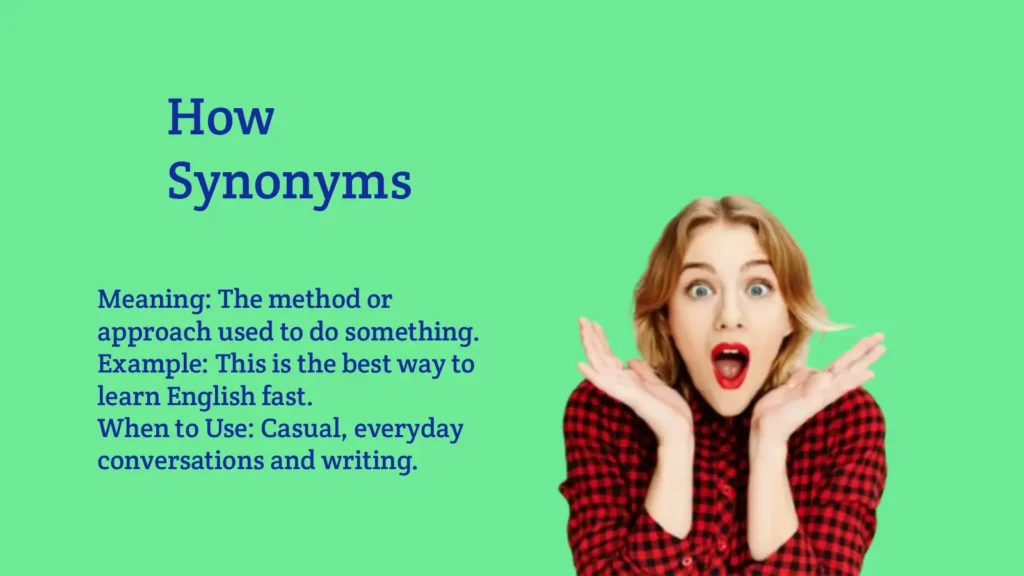

How synonyms like method, way, and manner explain the process, condition, or approach used to do something. For example, “Show me the way to solve this,” or “Explain the method you used.”
If you’re writing instructions, explanations, or analytical content, choosing the right synonym for how helps you sound clearer, more precise, and more professional.
In this guide, you’ll learn the meaning and example sentences for each synonym of how, so you can explain processes, techniques, and situations with accuracy and style.
What Does “How” Mean?
The word “how” is used to ask or explain the method, manner, condition, or process of doing something.
Examples:
- “How did you solve the problem?”
- “She explained how the machine works.”
“How” focuses on the process or approach, not the result. In writing, replacing it with a synonym can improve clarity, reduce repetition, and add sophistication.
Synonyms of How with Meanings, Examples, and Usage Tips
1. Way
Meaning: The method or approach used to do something.
Example: This is the best way to learn English fast.
When to Use: Casual, everyday conversations and writing.
2. Method
Meaning: A systematic or organized way of doing something.
Example: His teaching method is very effective.
When to Use: Academic, technical, or professional contexts.
3. Manner
Meaning: The style or behavior in which something is done.
Example: She spoke in a calm manner.
When to Use: Formal writing or behavioral descriptions.
4. Process
Meaning: A series of steps taken to achieve a result.
Example: The hiring process takes two weeks.
When to Use: Explanations involving stages or procedures.
5. Technique
Meaning: A specific skill or practiced way of doing something.
Example: He mastered a new painting technique.
When to Use: Skill-based or instructional writing.
6. Approach
Meaning: The way someone deals with a problem or task.
Example: Her approach to learning is very practical.
When to Use: Analytical or strategic contexts.
7. Means
Meaning: The method or resources used to achieve something.
Example: Education is a means to success.
When to Use: Formal or philosophical writing.
8. Style
Meaning: A distinctive way of doing or expressing something.
Example: His writing style is very engaging.
When to Use: Creative or descriptive contexts.
9. Mode
Meaning: A particular form or method of operation.
Example: The device operates in silent mode.
When to Use: Technical or formal writing.
10. Procedure
Meaning: An official or established way of doing something.
Example: Follow the safety procedure carefully.
When to Use: Instructions, manuals, or formal processes.
11. System
Meaning: An organized method or structure.
Example: The new system improves efficiency.
When to Use: Business, technology, or management contexts.
12. Path
Meaning: A chosen way or direction toward a goal.
Example: Education is his path to success.
When to Use: Motivational or metaphorical writing.
13. Methodology
Meaning: A set of methods used in a field of study.
Example: The research methodology was well designed.
When to Use: Academic or scientific writing.
14. Routine
Meaning: A regular or habitual way of doing something.
Example: Her morning routine keeps her productive.
When to Use: Daily habits or lifestyle topics.
15. Strategy
Meaning: A planned approach to achieve a goal.
Example: Their marketing strategy worked well.
When to Use: Business, planning, or competitive contexts.
16. Practice
Meaning: The usual way something is done.
Example: This practice is common in hospitals.
When to Use: Professional or institutional contexts.
17. Course
Meaning: A direction or plan of action.
Example: He changed course after the failure.
When to Use: Decision-making or narrative writing.
18. Fashion
Meaning: A way something is done, often old-fashioned usage.
Example: He greeted them in a polite fashion.
When to Use: Formal or literary tone.
19. Procession
Meaning: A gradual way something develops or happens.
Example: Learning is a slow procession.
When to Use: Abstract or poetic contexts.
20. Form
Meaning: The way something is structured or expressed.
Example: The idea took written form.
When to Use: Descriptive or analytical writing.
21. Modus Operandi
Meaning: A particular way of working or operating.
Example: This is the criminal’s usual modus operandi.
When to Use: Formal, investigative, or legal writing.
22. Scheme
Meaning: A planned way of doing something.
Example: The scheme failed due to poor planning.
When to Use: Strategic or evaluative contexts.
23. Blueprint
Meaning: A detailed plan or method.
Example: The guide is a blueprint for success.
When to Use: Instructional or motivational writing.
24. Formula
Meaning: A fixed or proven way of achieving results.
Example: Hard work is the formula for success.
When to Use: Advice or explanatory writing.
25. Design
Meaning: The planned way something is created or done.
Example: The course design is very effective.
When to Use: Creative or technical contexts.
26. Setup
Meaning: The arrangement or method used.
Example: The classroom setup helps learning.
When to Use: Casual or descriptive writing.
27. Framework
Meaning: A basic structure or method.
Example: The framework supports the entire project.
When to Use: Academic, business, or technical writing.
28. Pattern
Meaning: A repeated or recognizable way something happens.
Example: He noticed a pattern in her behavior.
When to Use: Analytical or observational contexts.
29. Roadmap
Meaning: A planned path showing how to reach a goal.
Example: This guide is a roadmap to success.
When to Use: Business, planning, or motivational writing.
30. Mechanism
Meaning: The working method behind something.
Example: Scientists studied the mechanism of the disease.
When to Use: Scientific or technical explanations.
Choosing the Right Synonym for “How”
Selecting the right synonym depends on your tone and audience:
| Tone / Context | Best Synonyms |
|---|---|
| Casual / Everyday | Way, Style, Setup, Routine |
| Formal / Academic | Method, Methodology, Procedure, Framework |
| Business / Strategy | Approach, Strategy, Roadmap, System |
| Creative / Literary | Manner, Path, Fashion, Course |
| Technical / Scientific | Mechanism, Mode, Process, Formula |
Cultural Tip
In professional writing, replacing how with method, approach, or process improves clarity and authority.
In casual speech, way is the most natural and widely used substitute.
Conclusion
Understanding the synonyms of how allows you to explain ideas more clearly and avoid repetition. Each alternative—whether method, manner, or approach—adds a specific tone and level of detail to your message.
By choosing the right word, you make your writing more precise, engaging, and professional. These synonyms show that even a simple word like how has many powerful ways to express meaning and intent.