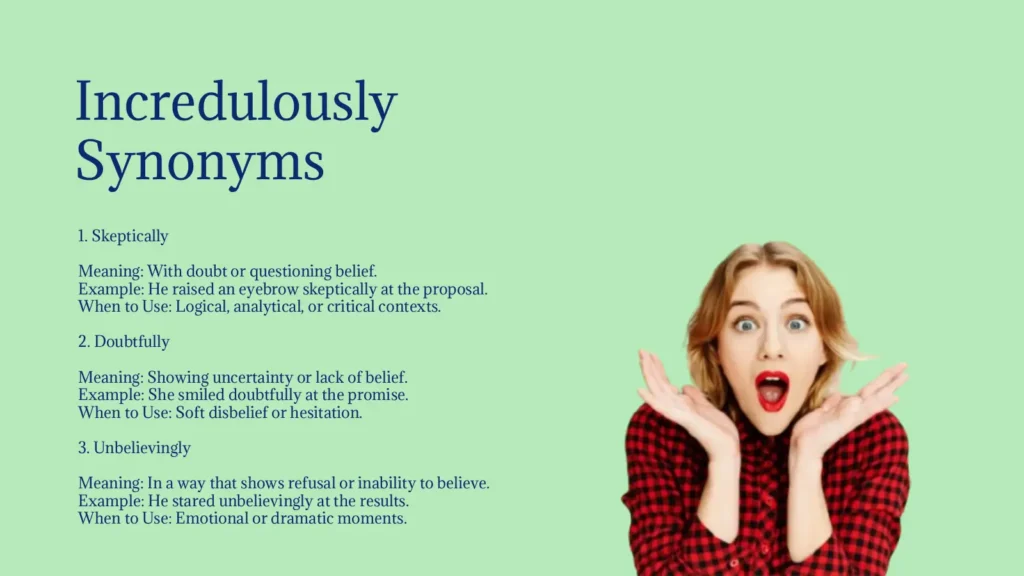

Incredulously synonym words like skeptically, doubtfully, and unbelievingly describe reacting with disbelief, shock, or suspicion. For example, “She stared incredulously at the message,” or “He laughed skeptically at the claim.”
If you’re writing dialogue, emotional reactions, or narrative moments, each word captures a different shade of disbelief—from mild doubt to complete astonishment.
In this guide, you’ll learn the meaning and example sentences for each incredulously synonym, so you can express disbelief, surprise, and skepticism with clarity and impact.
What Does “Incredulously” Mean?
The word “incredulously” describes reacting in a way that shows disbelief, doubt, or difficulty accepting something as true.
Examples:
- “She looked at him incredulously after hearing the news.”
- “He shook his head incredulously at the accusation.”
“Incredulously” is often used in storytelling, dialogue, and emotional writing to show surprise, shock, or skepticism.
Synonyms of “Incredulously” with Meanings, Examples, and Usage Tips
1. Skeptically
Meaning: With doubt or questioning belief.
Example: He raised an eyebrow skeptically at the proposal.
When to Use: Logical, analytical, or critical contexts.
2. Doubtfully
Meaning: Showing uncertainty or lack of belief.
Example: She smiled doubtfully at the promise.
When to Use: Soft disbelief or hesitation.
3. Unbelievingly
Meaning: In a way that shows refusal or inability to believe.
Example: He stared unbelievingly at the results.
When to Use: Emotional or dramatic moments.
4. Disbelievingly
Meaning: Expressing active disbelief.
Example: She laughed disbelievingly at the rumor.
When to Use: Strong rejection of a claim.
5. Questioningly
Meaning: With implied doubt or curiosity.
Example: He looked at her questioningly.
When to Use: Dialogue and subtle reactions.
6. Cynically
Meaning: With distrust or negative expectation.
Example: She responded cynically to the announcement.
When to Use: Sarcastic or critical tones.
7. Suspiciously
Meaning: With mistrust or concern.
Example: He glanced suspiciously at the stranger.
When to Use: Mystery or tense narratives.
8. Amazedly
Meaning: With shock or astonishment.
Example: She stared amazedly at the transformation.
When to Use: Positive or neutral disbelief.
9. Astoundedly
Meaning: With overwhelming surprise.
Example: He looked astoundedly at the score.
When to Use: Intense shock or amazement.
10. Shockedly
Meaning: Reacting with sudden surprise.
Example: She gasped shockedly at the news.
When to Use: Dramatic or emotional scenes.
11. Wonderingly
Meaning: With curiosity mixed with disbelief.
Example: He gazed wonderingly at the claim.
When to Use: Gentle, reflective writing.
12. Warily
Meaning: With caution and doubt.
Example: She listened warily to his explanation.
When to Use: Situations involving risk or mistrust.
13. Disdainfully
Meaning: With disbelief mixed with contempt.
Example: He snorted disdainfully at the excuse.
When to Use: Strong judgment or dismissal.
14. Scoffingly
Meaning: With mocking disbelief.
Example: She replied scoffingly to the idea.
When to Use: Sarcastic or dismissive dialogue.
15. Mockingly
Meaning: With ridicule or disbelief.
Example: He laughed mockingly at the suggestion.
When to Use: Humorous or biting tone.
16. Hesitantly
Meaning: With uncertainty or doubt.
Example: She nodded hesitantly at the claim.
When to Use: Soft skepticism or emotional restraint.
17. Uneasily
Meaning: With discomfort or disbelief.
Example: He shifted uneasily after hearing the story.
When to Use: Tense or awkward moments.
18. Tentatively
Meaning: With cautious doubt.
Example: She smiled tentatively at the explanation.
When to Use: Polite or restrained disbelief.
19. Dubiously
Meaning: With suspicion or doubt.
Example: He regarded the offer dubiously.
When to Use: Formal or analytical writing.
20. Sarcastically
Meaning: With ironic disbelief.
Example: She clapped sarcastically at the announcement.
When to Use: Sharp or humorous criticism.
21. Dryly
Meaning: With understated disbelief.
Example: He replied dryly to the claim.
When to Use: Subtle sarcasm or wit.
22. Blankly
Meaning: With stunned disbelief.
Example: She stared blankly after hearing the news.
When to Use: Shock or emotional numbness.
23. Stunnedly
Meaning: In a shocked, speechless way.
Example: He nodded stunnedly at the verdict.
When to Use: Sudden, powerful revelations.
24. Disconcertedly
Meaning: With confusion and disbelief.
Example: She laughed disconcertedly at the accusation.
When to Use: Awkward or unsettling moments.
25. Puzzledly
Meaning: With confusion and doubt.
Example: He frowned puzzledly at the statement.
When to Use: Mild disbelief or misunderstanding.
26. Bewilderedly
Meaning: With deep confusion or disbelief.
Example: She looked bewilderedly at the chaos.
When to Use: Overwhelming or surreal scenes.
27. Startledly
Meaning: With sudden surprise and disbelief.
Example: He jumped startledly at the news.
When to Use: Sudden revelations or shocks.
28. Wryly
Meaning: With ironic disbelief.
Example: She smiled wryly at the excuse.
When to Use: Subtle, intelligent commentary.
29. Disapprovingly
Meaning: With disbelief mixed with judgment.
Example: He shook his head disapprovingly.
When to Use: Moral or critical writing.
30. Nonplussedly
Meaning: With confusion or surprise.
Example: She stood nonplussedly at the outcome.
When to Use: Formal or literary tone.
Choosing the Right Synonym for “Incredulously”
Selecting the right synonym depends on tone and intent:
| Tone / Context | Best Synonyms |
|---|---|
| Neutral / Descriptive | Skeptically, Doubtfully, Questioningly |
| Emotional / Dramatic | Astoundedly, Shockedly, Stunnedly |
| Sarcastic / Critical | Scoffingly, Mockingly, Cynically |
| Subtle / Literary | Wryly, Dryly, Nonplussedly |
| Tense / Suspicious | Warily, Dubiously, Suspiciously |
Cultural Tip
“Incredulously” works well in storytelling, but replacing it with skeptically or wryly can make dialogue feel more natural and less repetitive.
Conclusion
Understanding the synonyms of incredulously helps you express disbelief with greater precision and emotional depth. Each alternative—whether skeptically, astoundedly, or scoffingly—adds a distinct tone to your writing.
By choosing the right synonym, you sharpen characterization, strengthen dialogue, and make reactions feel vivid and believable. Disbelief isn’t one-size-fits-all—and neither should your words be.