
Out of touch synonym words like unaware, disconnected, and uninformed describe someone who lacks awareness of current realities, trends, or the feelings of others. For example, “The policy made him seem disconnected from everyday struggles,” or “Leaders who remain uninformed often lose public trust.”
If you’re writing about awareness, social perception, or relevance, each word highlights a different shade of detachment—from mild unfamiliarity to complete disconnection.
In this guide, you’ll learn the meaning and example sentences for each out of touch synonym, so you can express distance, ignorance, and lack of awareness with clarity and precision.
What Does “Out of Touch” Mean?
The phrase “out of touch” refers to being unaware, uninformed, or disconnected from current events, social realities, or the needs of others.
Examples:
- “The executive appeared out of touch with employee concerns.”
- “Anyone ignoring technology today risks becoming out of touch.”
Being out of touch can suggest generational gaps, social distance, or a failure to adapt to change.
Synonyms of “Out of Touch” with Meanings, Examples, and Usage Tips
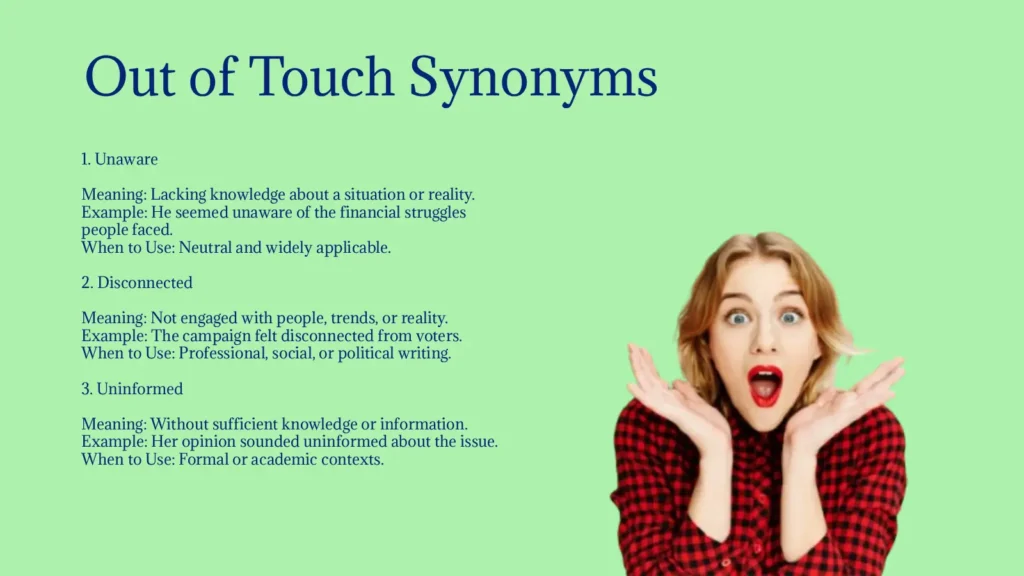
1. Unaware
Meaning: Lacking knowledge about a situation or reality.
Example: He seemed unaware of the financial struggles people faced.
When to Use: Neutral and widely applicable.
2. Disconnected
Meaning: Not engaged with people, trends, or reality.
Example: The campaign felt disconnected from voters.
When to Use: Professional, social, or political writing.
3. Uninformed
Meaning: Without sufficient knowledge or information.
Example: Her opinion sounded uninformed about the issue.
When to Use: Formal or academic contexts.
4. Oblivious
Meaning: Completely unaware of what is happening.
Example: He was oblivious to the tension in the room.
When to Use: Slightly critical but common in conversation.
5. Detached
Meaning: Emotionally or mentally distant.
Example: The manager appeared detached from team morale.
When to Use: Professional or psychological writing.
6. Outdated
Meaning: No longer relevant or current.
Example: Those marketing strategies are outdated.
When to Use: Business, tech, or cultural discussions.
7. Clueless
Meaning: Having no understanding at all.
Example: He was clueless about modern workplace culture.
When to Use: Informal or conversational tone.
8. Ignorant
Meaning: Lacking knowledge or awareness.
Example: The comment revealed he was ignorant of the facts.
When to Use: Can sound harsh—use carefully.
9. Insensitive
Meaning: Not aware of others’ feelings.
Example: Her response felt insensitive to their pain.
When to Use: Emotional or social contexts.
10. Unresponsive
Meaning: Not reacting to changing needs or feedback.
Example: The company seemed unresponsive to customer concerns.
When to Use: Professional or corporate writing.
11. Remote
Meaning: Distant from everyday realities.
Example: Leadership felt remote from worker challenges.
When to Use: Formal or descriptive tone.
12. Aloof
Meaning: Emotionally distant or uninvolved.
Example: He remained aloof during the discussion.
When to Use: Literary or personality descriptions.
13. Behind the Times
Meaning: Old-fashioned or not keeping up with change.
Example: Their policies are behind the times.
When to Use: Conversational or editorial writing.
14. Unplugged
Meaning: Not connected to modern communication or culture.
Example: Brands that stay unplugged risk losing relevance.
When to Use: Modern or tech-focused contexts.
15. Inattentive
Meaning: Not paying enough attention.
Example: The inattentive leadership missed warning signs.
When to Use: Professional or analytical tone.
16. Unconscious
Meaning: Not aware of one’s behavior or surroundings.
Example: He was unconscious of how his words affected others.
When to Use: Formal or psychological writing.
17. Out of Date
Meaning: No longer current or fashionable.
Example: That viewpoint feels out of date.
When to Use: Neutral and versatile.
18. Unmindful
Meaning: Not giving consideration to something.
Example: She was unmindful of the risks involved.
When to Use: Formal contexts.
19. Tone-Deaf
Meaning: Insensitive to public sentiment.
Example: The advertisement was widely criticized as tone-deaf.
When to Use: Media, branding, or cultural commentary.
20. Isolated
Meaning: Separated from others or reality.
Example: Decision-makers became isolated from public opinion.
When to Use: Social or organizational writing.
21. Sheltered
Meaning: Protected from real-world experiences.
Example: His sheltered upbringing made him unaware of hardship.
When to Use: Personal or descriptive narratives.
22. Blind
Meaning: Unable or unwilling to notice something obvious.
Example: The board was blind to the warning signs.
When to Use: Strong, metaphorical writing.
23. Removed
Meaning: Distant from direct involvement.
Example: Executives felt removed from daily operations.
When to Use: Professional or corporate contexts.
24. Ignorant of Reality
Meaning: Not recognizing real conditions.
Example: The proposal seemed ignorant of reality.
When to Use: Critical or analytical writing.
25. Unperceptive
Meaning: Lacking insight or awareness.
Example: His unperceptive remarks upset the audience.
When to Use: Formal or intellectual tone.
26. Out of Sync
Meaning: Not aligned with current trends or needs.
Example: The brand feels out of sync with younger consumers.
When to Use: Business, marketing, or culture.
27. Antiquated
Meaning: Extremely old-fashioned.
Example: The rules appear antiquated today.
When to Use: Formal or academic writing.
28. Misaligned
Meaning: Not matching expectations or realities.
Example: Leadership priorities were misaligned with employee needs.
When to Use: Corporate or strategic language.
29. Unacquainted
Meaning: Not familiar with something.
Example: He was unacquainted with local customs.
When to Use: Neutral and formal.
30. In the Dark
Meaning: Lacking knowledge or awareness.
Example: Staff were kept in the dark about the changes.
When to Use: Informal or journalistic tone.
Choosing the Right Synonym for “Out of Touch”
Selecting the right synonym depends on your tone and purpose:
| Tone / Context | Best Synonyms |
|---|---|
| Neutral / Professional | Unaware, Uninformed, Detached, Removed |
| Informal / Conversational | Clueless, Behind the Times, In the Dark |
| Critical / Strong | Ignorant, Blind, Tone-Deaf, Antiquated |
| Business / Strategic | Misaligned, Disconnected, Out of Sync |
| Emotional / Social | Insensitive, Aloof, Isolated |
Cultural Tip
In professional writing, “misaligned” or “disconnected” sounds more diplomatic than “clueless.” In opinion pieces, stronger terms like “tone-deaf” create greater impact.
Conclusion
Understanding the synonyms of out of touch helps you describe lack of awareness with greater precision. Each word—whether disconnected, oblivious, or misaligned—captures a different level of detachment from reality.
By choosing the right synonym, you refine tone, strengthen clarity, and communicate your message more effectively. Awareness keeps people relevant—and the right word ensures that idea resonates clearly.