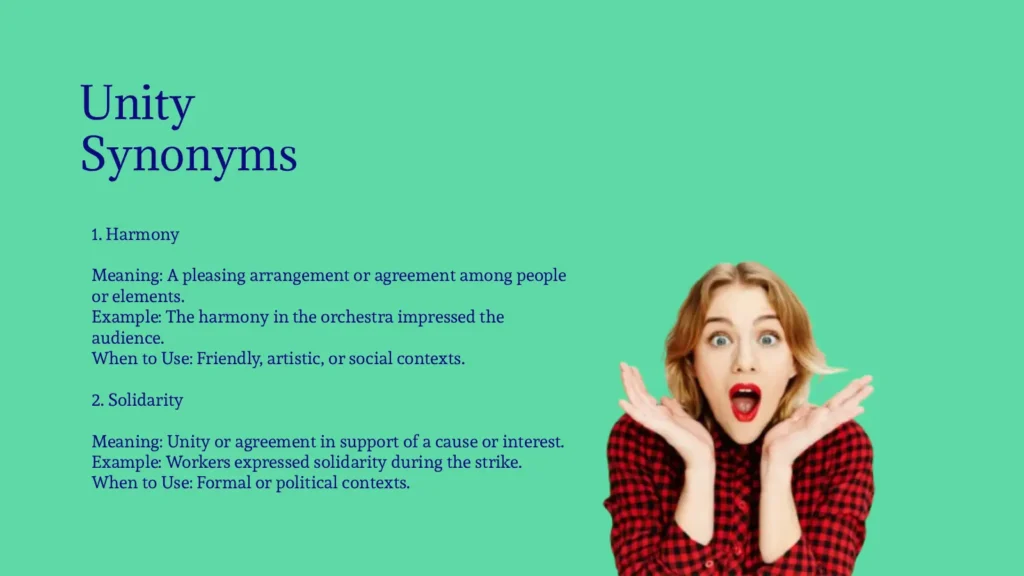

Unity synonym words like harmony, solidarity, and cohesion describe the state of being together, connected, or in agreement. For example, “The team worked in harmony,” or “There was a strong sense of solidarity among the group.”
If you’re writing or speaking about relationships, teamwork, or social cohesion, each word reflects a slightly different shade of togetherness—from casual cooperation to deep alignment.
In this guide, you’ll learn the meaning and example sentences for each unity synonym so you can express togetherness, agreement, and connection with clarity and style.
What Does “Unity” Mean?
The word “unity” refers to the state of being one, undivided, or in agreement. It often describes social, political, or emotional cohesion among individuals or groups.
Examples:
- “The community showed remarkable unity during the crisis.”
- “Unity in the team led to outstanding results.”
Unity emphasizes connection, cooperation, and mutual understanding. While it can describe general agreement, it often highlights a sense of shared purpose or collective identity.
Synonyms of Unity with Meanings, Examples, and Usage Tips
1. Harmony
Meaning: A pleasing arrangement or agreement among people or elements.
Example: The harmony in the orchestra impressed the audience.
When to Use: Friendly, artistic, or social contexts.
2. Solidarity
Meaning: Unity or agreement in support of a cause or interest.
Example: Workers expressed solidarity during the strike.
When to Use: Formal or political contexts.
3. Cohesion
Meaning: The act of sticking together or forming a united whole.
Example: Team cohesion is crucial for project success.
When to Use: Professional, academic, or social group contexts.
4. Concord
Meaning: Agreement or peaceful coexistence.
Example: The countries lived in concord after years of conflict.
When to Use: Formal or historical writing.
5. Consensus
Meaning: General agreement among a group.
Example: The committee reached a consensus on the proposal.
When to Use: Professional, decision-making, or organizational contexts.
6. Union
Meaning: The act of joining together.
Example: The union of the two companies created new opportunities.
When to Use: Formal or organizational contexts.
7. Togetherness
Meaning: The state of being close or connected with others.
Example: Family togetherness is valued during holidays.
When to Use: Casual, emotional, or social contexts.
8. Integration
Meaning: Combining parts into a unified whole.
Example: Successful integration of departments improved workflow.
When to Use: Professional, social, or technical contexts.
9. Unison
Meaning: Simultaneous agreement or action.
Example: The choir sang in perfect unison.
When to Use: Music, formal, or descriptive writing.
10. Accord
Meaning: Agreement or harmony of opinion or feeling.
Example: Their accord led to a peaceful resolution.
When to Use: Formal, diplomatic, or literary contexts.
11. Teamwork
Meaning: Cooperative effort by a group to achieve a goal.
Example: Effective teamwork produced excellent results.
When to Use: Casual, professional, or organizational contexts.
12. Bond
Meaning: A connection or tie between individuals.
Example: A strong bond united the friends through hardships.
When to Use: Emotional, casual, or social contexts.
13. Alliance
Meaning: A partnership formed for mutual benefit.
Example: The alliance strengthened the country’s defense.
When to Use: Political, organizational, or formal contexts.
14. Conformity
Meaning: Agreement with standards, rules, or norms.
Example: The group achieved unity through conformity to guidelines.
When to Use: Social, formal, or organizational contexts.
15. Oneness
Meaning: Complete unity or indivisibility.
Example: Meditation helped her feel a sense of oneness with nature.
When to Use: Spiritual, poetic, or philosophical contexts.
16. Brotherhood
Meaning: Unity among a group with shared interests or goals.
Example: The fraternity fostered a strong sense of brotherhood.
When to Use: Social, emotional, or informal contexts.
17. Fellowship
Meaning: Friendly association or shared purpose.
Example: Their fellowship created lifelong friendships.
When to Use: Casual, religious, or social contexts.
18. Solidness
Meaning: Strength and unity combined.
Example: The solidness of the structure reflected the team’s unity.
When to Use: Technical, professional, or metaphorical use.
19. Amity
Meaning: Peaceful and friendly relations.
Example: Countries enjoyed long-term amity.
When to Use: Formal, diplomatic, or literary contexts.
20. Affiliation
Meaning: Connection with a group or organization.
Example: His affiliation with the club strengthened community ties.
When to Use: Organizational or formal contexts.
21. Congruity
Meaning: Harmony or compatibility of elements.
Example: The congruity of ideas led to a successful project.
When to Use: Formal, academic, or analytical writing.
22. Symmetry
Meaning: Balanced and harmonious arrangement.
Example: The symmetry in design reflected unity in style.
When to Use: Artistic, technical, or formal contexts.
23. Affinity
Meaning: Natural connection or understanding.
Example: Their affinity for music brought them together.
When to Use: Casual, social, or emotional contexts.
24. Collaboration
Meaning: Working together toward a common goal.
Example: Collaboration between departments improved efficiency.
When to Use: Professional, organizational, or creative contexts.
25. Compactness
Meaning: Being closely united or tightly organized.
Example: The compactness of the team improved performance.
When to Use: Technical or descriptive contexts.
26. Convergence
Meaning: Coming together from different directions or viewpoints.
Example: The convergence of ideas led to innovative solutions.
When to Use: Formal, professional, or academic contexts.
27. Coalescence
Meaning: The process of merging into a unified whole.
Example: The coalescence of efforts produced great results.
When to Use: Formal, literary, or descriptive contexts.
28. Connection
Meaning: A link or relationship between people or things.
Example: Human connection is the key to lasting unity.
When to Use: Casual, emotional, or professional contexts.
29. Rapport
Meaning: Close and harmonious relationship.
Example: The teacher had a great rapport with students.
When to Use: Friendly, professional, or social contexts.
30. Synchrony
Meaning: Coordinated action or movement in time.
Example: The dancers performed with perfect synchrony.
When to Use: Artistic, social, or descriptive contexts.
Choosing the Right Synonym for “Unity”
Selecting the right synonym depends on your tone and audience:
| Tone / Context | Best Synonyms |
|---|---|
| Friendly or Social | Togetherness, Bond, Fellowship, Rapport |
| Respectful / Formal | Solidarity, Accord, Amity, Cohesion |
| Neutral / Descriptive | Harmony, Integration, Convergence, Connection |
| Positive / Supportive | Brotherhood, Affinity, Collaboration, Oneness |
| Artistic / Poetic | Synchrony, Symmetry, Oneness, Coalescence |
Cultural Tip
In teamwork or organizational contexts, words like cohesion, collaboration, and integration are preferred.
In social or emotional writing, bond, brotherhood, or fellowship capture connection and togetherness.
Use formal synonyms like accord or solidarity in political, legal, or diplomatic writing to convey seriousness.
Conclusion
Understanding the synonyms of unity helps you convey every shade of togetherness—from casual connection to strong cohesion. Each term, whether harmony, solidarity, or bond, reflects not just alignment but the shared purpose and connection that bring people together.
By choosing the right word, you set the tone—friendly, formal, or poetic—for your audience. These synonyms remind us that unity is both a feeling and an action, a bridge that transforms individuals into a connected whole.